The agent harness race proves it: the model isn't the moat, the context is
DeepSeek Harness, Claude Code, OpenAI Codex — the 2026 agent wars look like a fight over models, but the winners are being decided one layer down, by who controls the context the model sees. Marketing AI works the same way.
There's a passage buried in DeepSeek's launch materials for Harness, the open-source agent framework that pulled 150,000+ GitHub stars in its first week, that most of the coverage treated as a footnote. It's this: the headline agent benchmark scores for their new V4-Pro model — 87.9 on Terminal Bench 2.1, 74.1 on Toolathlon-Verified — were measured inside the Harness. Not the raw model. The model plus a layer of software that manages what it sees, which tools it can call, how sessions persist, and how failures recover.
That footnote is the whole story of AI agents in 2026. The models are converging. The layer around them — the harness — is where outcomes are decided.
The same model, wildly different results
Anyone who has worked with agents has lived this. Take the exact same frontier model and give it:
- A blank prompt box. You get a generic, confident answer that ignores everything about your situation.
- A well-built harness. The same model, pointed at your actual files, your actual tools, with structure for planning and verification — suddenly does work you'd happily pay for.
Same intelligence in, radically different value out. The difference isn't the model. It's the context and constraints the harness supplies.
The harness builders know it. Claude Code's entire product is the layer that reads your repo, manages permissions, maintains the session, and structures how the model iterates. OpenAI Codex, same. And DeepSeek Harness's radical move was to open that layer up — every part a plugin, including the model adapter itself, which is the loudest possible way of saying "the model is a commodity component."
When the newest major entrant in a market designs its flagship release around the premise that models are swappable, believe them.
Every domain has its own harness — including yours
Coding is just the visible case because developers build their own tools first. The pattern generalizes to any knowledge work: the winner in each domain is whoever builds the best domain harness — the system that loads the right context and constrains the output usefully.
A support agent is only as good as the help center it reads. A legal agent is only as good as the case file it's given. And a marketing agent is only as good as its read of the brand.
That last one is where we've spent two years, so let me be concrete about what a "brand harness" has to load — the marketing equivalent of what a coding harness gets from a git repository:
- Identity. Colors, type, logo — the visual system an ad must live inside.
- Message. The headline, the value proposition, the offer. The words that are already converting.
- Products and proof. What's being sold, what it costs, why anyone believes the claims.
- Constraints. Formats and sizes, platform rules, the difference between a story and a banner.
Miss any of those four and the output looks like every generic AI image you've ever scrolled past: pretty, confident, and obviously not from your company.
Why the blank prompt box still loses
Most "AI marketing" tools still ship the blank prompt box. They've made generation nearly free and left the context as the user's homework — you describe your brand, in words, every single time, and hope the model improvises well.
The harness view says that's backwards. The context shouldn't be typed; it should be loaded. And here's the thing about small brands: they've already published their entire brand context. The colors are in the CSS. The fonts are loaded. The logo is in the header. The converting headline is the one they A/B-tested. It's all sitting at one URL — structured, public, and machine-readable.
That's the bet On Brand Ads is built on: paste your URL, the harness reads the brand — palette, type, logo, message, products — and then every generation downstream starts loaded instead of blank. The AI writes the headline from your own site's language. Each ad size composes natively from the same read. Campaign ten inherits the same context as campaign one.
The takeaway for anyone buying AI tools in 2026
Ignore the model-name arms race for a second and ask one question about any AI tool you're evaluating: what does it know before you start typing?
- If the answer is "nothing — describe what you want," you are the harness. You'll do the context work every session, forever.
- If the answer is "everything it needs — it reads your source of truth," the vendor built the hard layer, and the model underneath barely matters.
DeepSeek Harness made that argument structural this week: when everything is a plugin, the only thing that isn't swappable is the context pipeline. It's true for coding agents reading a repo. It's true for ad generators reading a website. The model isn't the moat. It never really was.
More Posts
Stop Prompting Your AI Ad Generator. Give It Your Website.
Most AI ad generators start with a prompt and end with a pretty image. I think that is the wrong starting point. Here is why a website makes a better brief, where the approach fails, and what I would actually ship.

Why is making on-brand ads so hard? The real cost nobody prices in
Every tool promises AI ads. So why does a five-image campaign still take a small brand a week? The bottleneck was never image generation — it's brand context. Here's the industry's real problem, and why the fix is an AI ad generator that starts from your website.
We let an AI ad generator run a back-to-school drop — five ad sizes, zero resizing
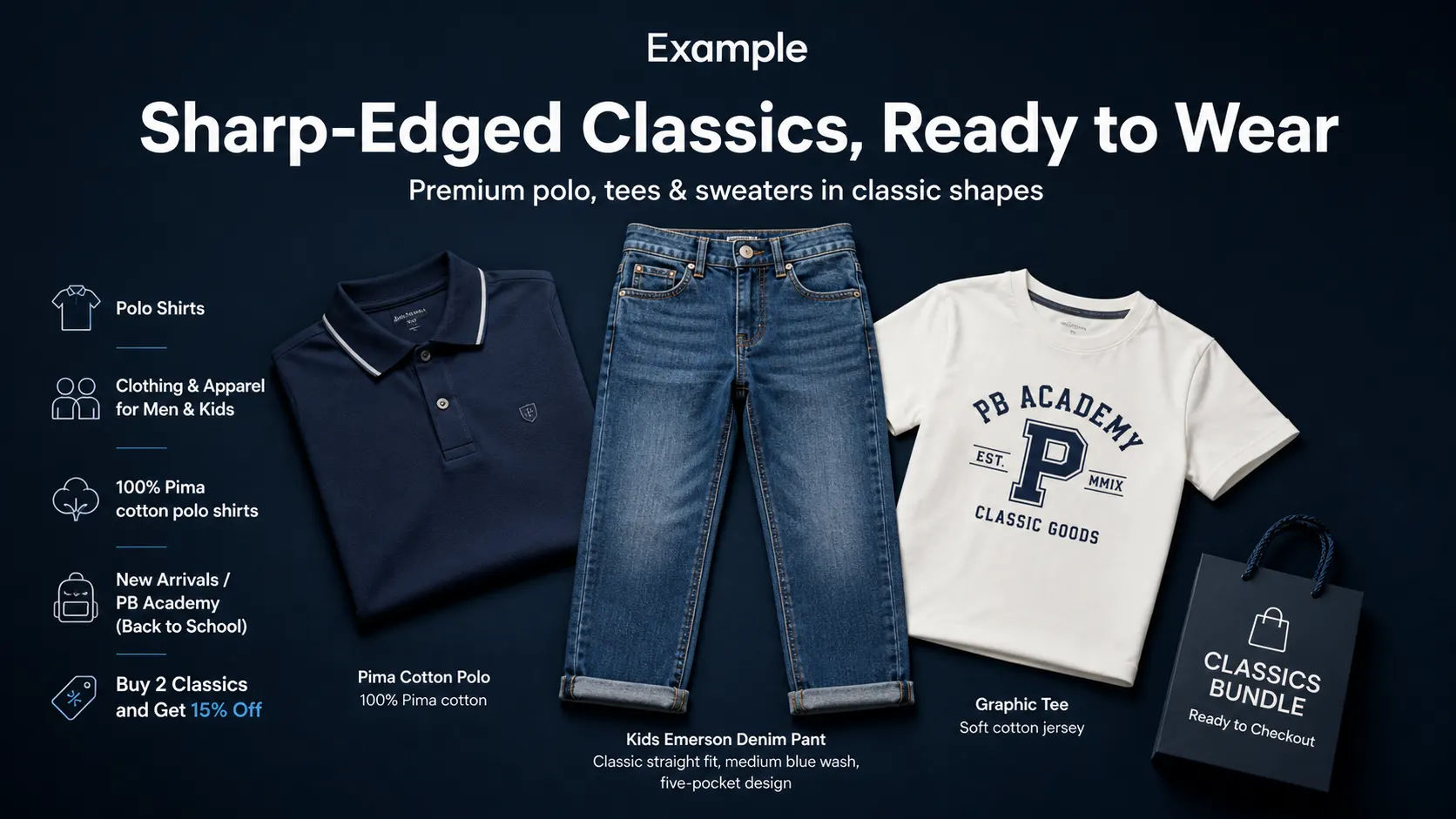
We pointed an AI ad generator at a seasonal clothing store to see how much of the usual launch busywork would disappear. The ad generator read the brand, wrote the headline, and produced every ad size. Most of the midnight resizing is genuinely gone.
Newsletter
Join the community
Subscribe to our newsletter for the latest news and updates