DeepSeek Harness hit 157k GitHub stars in 5 days — here's what it means for AI agents beyond coding
DeepSeek Harness (dsh), the everything-is-a-plugin open-source agent harness, is the fastest-growing repo on GitHub right now. We break down what it is, what the hype is really about, and what an open agent layer means outside coding — including for marketing.
If you follow AI at all, you've seen the numbers. DeepSeek Harness — dsh, the open-source agent harness DeepSeek AI published on August 13, 2026 — went from zero to roughly 95,000 GitHub stars in about two days. As of August 17 it stands past 157,000 stars and 16,000 forks, which puts it among the fastest adoption curves GitHub has ever recorded for a developer tool. The repo outlines it plainly: "DeepSeek Harness: Everything is a Plugin."
Star counts are vanity metrics. But the speed here is the signal: something about this release tapped a nerve that's worth understanding even if you never install it — because the nerve isn't about coding. It's about who controls the layer where AI agents do their work.
What DeepSeek Harness actually is
An agent harness is the software layer between a language model and the real world: file systems, shell commands, tool calls, sessions, approvals, long-running workflows. Claude Code and OpenAI Codex package that layer as commercial products with extension points. DeepSeek Harness makes the entire runtime composable instead: the model adapter, the tool registry, the session log, the sandbox, even the agent loop itself — every one is a Cordis plugin, replaceable from configuration, with no privileged core to patch.
Practically, that means three things:
- The model is swappable. Run it against DeepSeek's API, Anthropic or OpenAI endpoints, or local models through Ollama. The harness doesn't care.
- Everything is inspectable. dsh enforces a "model-visible means logged" invariant — anything that reaches a model request can be reconstructed from an append-only session log. Audits, replays, and forking all derive from that stream.
- It's MIT-licensed and free. You pay only for whatever model API you point it at.
It's still a developer preview — the README warns in capitals that there will be compatibility-breaking changes — and early testers report heavy token usage per task. This is a framework for agent builders to evaluate, not a production platform.
Why 157,000 stars, though
The interesting question isn't what dsh does — Claude Code and Codex already do most of it. The interesting question is why developers starred it this fast.
Part of it is DeepSeek's trajectory: V4-Pro-0813 shipped the same week, and the company reported agent benchmark scores (87.9 on Terminal Bench 2.1, 74.1 on Toolathlon-Verified) measured inside the Harness itself — so the repo doubles as the reference implementation of how they got those numbers.
But the bigger part, judging by the reactions across Reddit and HN, is the statement the architecture makes: the layer that determines how agents use tools, manage sessions, and execute long workflows should not be owned by any model vendor. Developers have spent two years building careers on harnesses they can't fully inspect or rewire, and dsh is the first high-profile, fully composable alternative. It's model-agnostic by design — you can run it against Claude while it's offline-capable against a local Ollama model. The repo even ships .claude and AGENTS.md configs so other vendors' coding agents can contribute to it.
The strategic read: DeepSeek is no longer competing only on model intelligence and token prices. With Harness, it moves into the territory where Claude Code became a business — and gives it away.
What an open harness layer means outside coding
Here's where it gets relevant if you're not a developer.
A coding agent is the most mature example of the pattern, but the pattern is general: a strong model + a harness that supplies context, tools, and constraints = a specialist. Swap the context from "a git repository" to something else, and you get a different specialist. A legal harness reads case files. A support harness reads your help center. And a marketing harness reads your brand.
That last one is the whole thesis of what we build. On Brand Ads is, in harness terms, exactly this pattern: a model, plus a domain-specific harness whose job is to load the right context — your website's colors, fonts, logo, products, and message — and constrain the output to ad formats. The user never sees the harness; they see a machine that already knows their brand because the harness read it from their URL.
The lesson from dsh's week applies to every domain-specific agent, including ours: the moat was never the model. Models are plugins now — literally, in dsh's case. The moat is the layer that decides what the model sees and what it's allowed to do. In coding, that's the repo and the sandbox. In marketing, it's the brand.
Should you care this week?
If you build agents: yes — install it (npx @deepseek-ai/dsh web), read the architecture docs, and treat it as a preview of where every serious agent stack is heading: composable runtimes, auditable session logs, swappable everything.
If you use AI agents but don't build them: watch one thing. The pace of this week proves the harness layer is becoming a market of its own, and open composable harnesses push the value away from "which model" toward "which context." For your own workflows, the question worth asking is the same one dsh forces: what does the agent see before it starts? The teams and tools that answer that well — with real context, not a blank prompt box — are the ones that get useful output.
That's as true for an ad generator reading your website as it is for a coding agent reading your repo.
More Posts
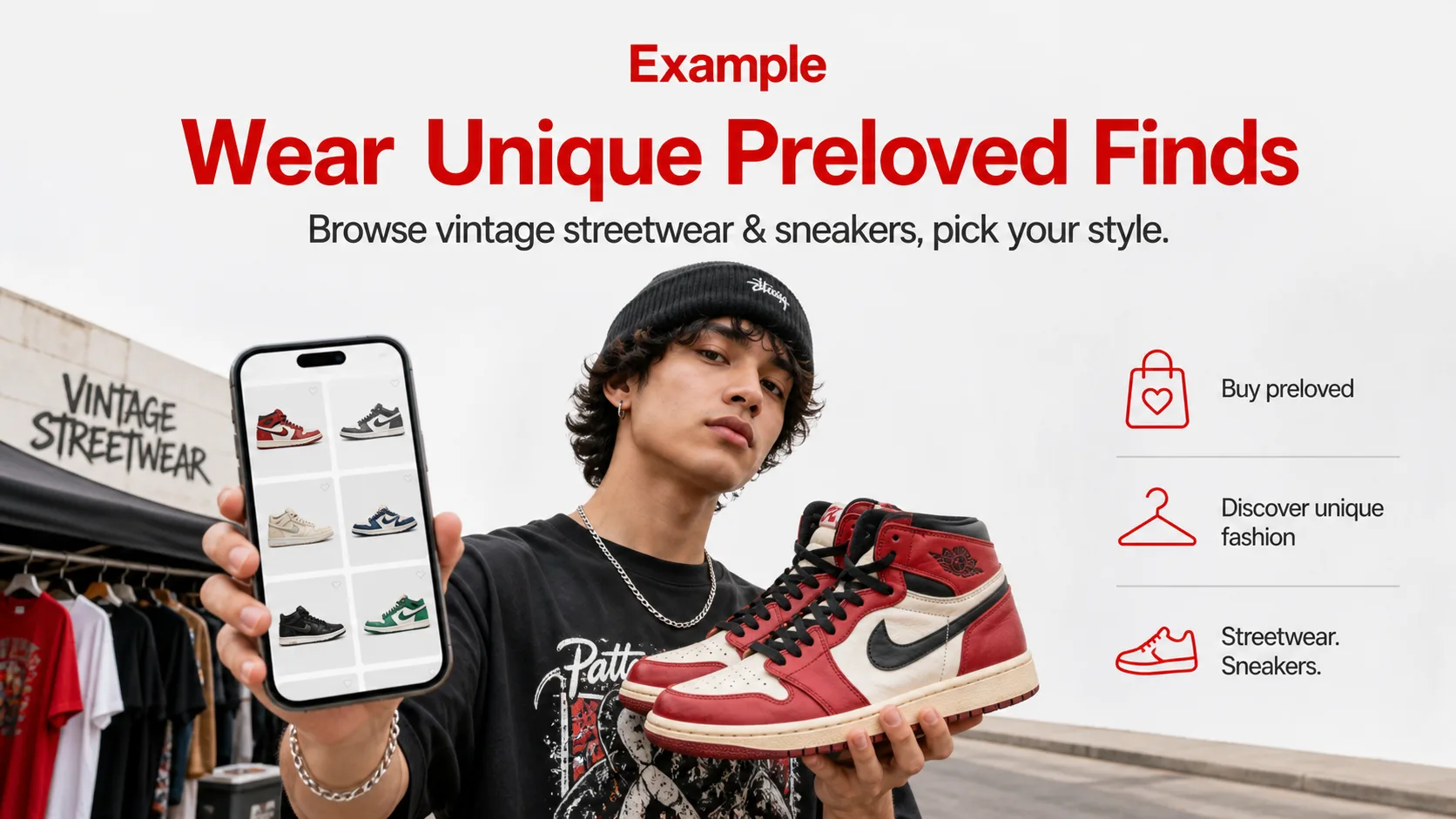
An AI ad generator for a two-sided marketplace: two campaigns from one brand read
We ran a preloved streetwear marketplace through an AI ad generator and ran into the oldest problem in marketplace marketing: the ad that recruits buyers is useless to sellers, and vice versa. AI-generated ads from one brand read solve both — without doubling the work.
I put this week's hottest AI agent tools on my actual marketing busywork — here's what survived
DeepSeek Harness is the internet's favorite repo this week. Can a coding-agent harness — dsh, Claude Code — actually help a solo founder's marketing? A no-hype test across the tasks that eat my week: resizing, ad copy, campaign briefs, landing checks.
Stop Prompting Your AI Ad Generator. Give It Your Website.
Most AI ad generators start with a prompt and end with a pretty image. I think that is the wrong starting point. Here is why a website makes a better brief, where the approach fails, and what I would actually ship.
Newsletter
Join the community
Subscribe to our newsletter for the latest news and updates