An AI ad generator for a two-sided marketplace: two campaigns from one brand read
We ran a preloved streetwear marketplace through an AI ad generator and ran into the oldest problem in marketplace marketing: the ad that recruits buyers is useless to sellers, and vice versa. AI-generated ads from one brand read solve both — without doubling the work.
Two-sided marketplaces die in a specific, boring way. They get one side right and forget the other. Depop-style resale apps usually nail the buyer side, because that's the fun campaign, and quietly starve the supply side, because "come list your old sneakers" is a harder ad to make exciting. So when we pointed the On Brand Ads AI ad generator at a preloved streetwear and sneakers marketplace, the interesting question wasn't whether the AI could make a nice buyer ad. It was whether the same brand read could serve both audiences.
The buyer side, which everyone gets right
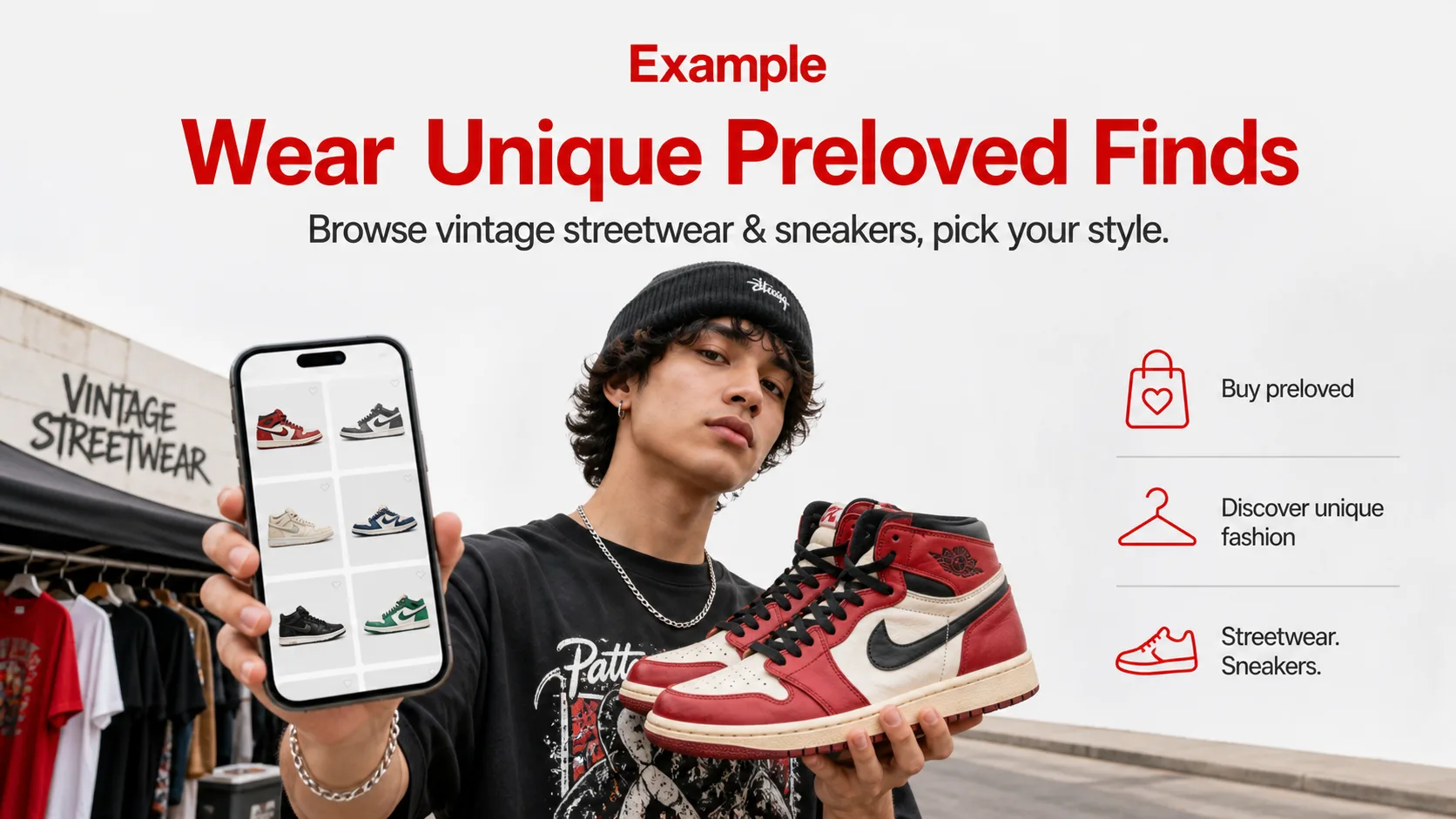
The AI brand read came back with a red-and-black streetwear palette, the flea-market energy of the original site, and a buyer-facing message: "Wear Unique Preloved Finds." Browse vintage streetwear and sneakers, pick your style.

That's a clean acquisition ad. It leans on the thing resale actually sells, which isn't cheap clothes, it's uniqueness. Nobody opens a resale app to save money; they open it to find the one jacket nobody else has. The generator got that right by putting a worn, scuffed pair of Jordans in someone's hand and a grid of colorful listings on their phone. The scuffing matters. It's the proof.
The 4:5 feed version the AI generated gives the same idea more room to breathe:

And the story, for the swipe-up-to-shop crowd:

So far, so good. Any decent AI ad generator can make this set. Here's the part that actually matters.
The seller side, which everyone forgets
A marketplace with buyers and no inventory is a graveyard. The creative above does nothing for the 19-year-old with a closet full of hype gear who could be your supply. You need a second track, and this is where most teams either give up or write a separate, off-brand "become a seller" ad that looks like it came from a different company.
The fix, and the reason this matters for an AI ad generator specifically: the brand kit is already locked from the read above. Same palette, same type, same flea-market mood. You generate the seller track from the same context, just with a different message. "Turn the closet you're not wearing into cash" would be my line. Same red, same energy, opposite half of the marketplace.
I'd run these as two AI-generated creative sets against two audiences and stop pretending one ad serves a two-sided business. The generator lets you do that cheaply, which is the only reason it's now actually possible to do at all.
What I'd watch
Two things, neither of which the AI fixes for you.
First, the inventory problem. If your seller ads work too well and buyer ads lag, you get a flood of listings with nobody buying, and sellers churn. Marketplaces should usually over-index on the side they're short on, which for most resale apps early on is buyers, not sellers. Don't take a generated "Buy 2" instinct from a different campaign and apply it here; resale isn't a bundle business, it's a discovery business. Lead with the one-of-a-kind angle, always.
Second, the sustainability claim. "Preloved" is doing a lot of work in the headline, and Gen Z will sniff out greenwashing fast. If you're going to lean on the planet angle, show the actual secondhand inventory in the creative, which this AI-generated set does, rather than slapping a leaf icon on a stock photo. The whole credibility of the brand rests on the items looking real and worn, which is why the scuffed sneaker is doing more marketing work than the headline is.

The takeaway
One website read, two campaigns, two audiences, one consistent brand. That's the actual unit of work for a marketplace, and it's the thing that used to require a creative team and a budget most early marketplaces don't have. The AI reads the brand once and lets you fork it per audience. You still have to know that you need both forks, and which one to spend on first. That judgment is still yours.
More Posts
I put this week's hottest AI agent tools on my actual marketing busywork — here's what survived
DeepSeek Harness is the internet's favorite repo this week. Can a coding-agent harness — dsh, Claude Code — actually help a solo founder's marketing? A no-hype test across the tasks that eat my week: resizing, ad copy, campaign briefs, landing checks.

Why is making on-brand ads so hard? The real cost nobody prices in
Every tool promises AI ads. So why does a five-image campaign still take a small brand a week? The bottleneck was never image generation — it's brand context. Here's the industry's real problem, and why the fix is an AI ad generator that starts from your website.
Stop Prompting Your AI Ad Generator. Give It Your Website.
Most AI ad generators start with a prompt and end with a pretty image. I think that is the wrong starting point. Here is why a website makes a better brief, where the approach fails, and what I would actually ship.
Newsletter
Join the community
Subscribe to our newsletter for the latest news and updates