What an AI ad generator does with 'brand purpose': show the mechanism, not the leaf
We ran a sustainable pet store through an AI ad generator and ended up arguing about the most overused idea in e-commerce: brand purpose. The AI put the receipt — 'tree planted' — in the ad. That's what AI-generated ads for DTC brands should do with a cause.
"Brand purpose" is the most abused phrase in e-commerce. Half the stores using it have bolted a cause onto the checkout as a marketing afterthought, and shoppers have learned to ignore the gesture. So when the On Brand Ads AI ad generator read a sustainable online pet store, the thing worth watching wasn't whether the AI could produce a nice green ad with a leaf on it. Any generator can. The question was whether it would tie the purchase to the cause tightly enough that the cause actually does some selling.
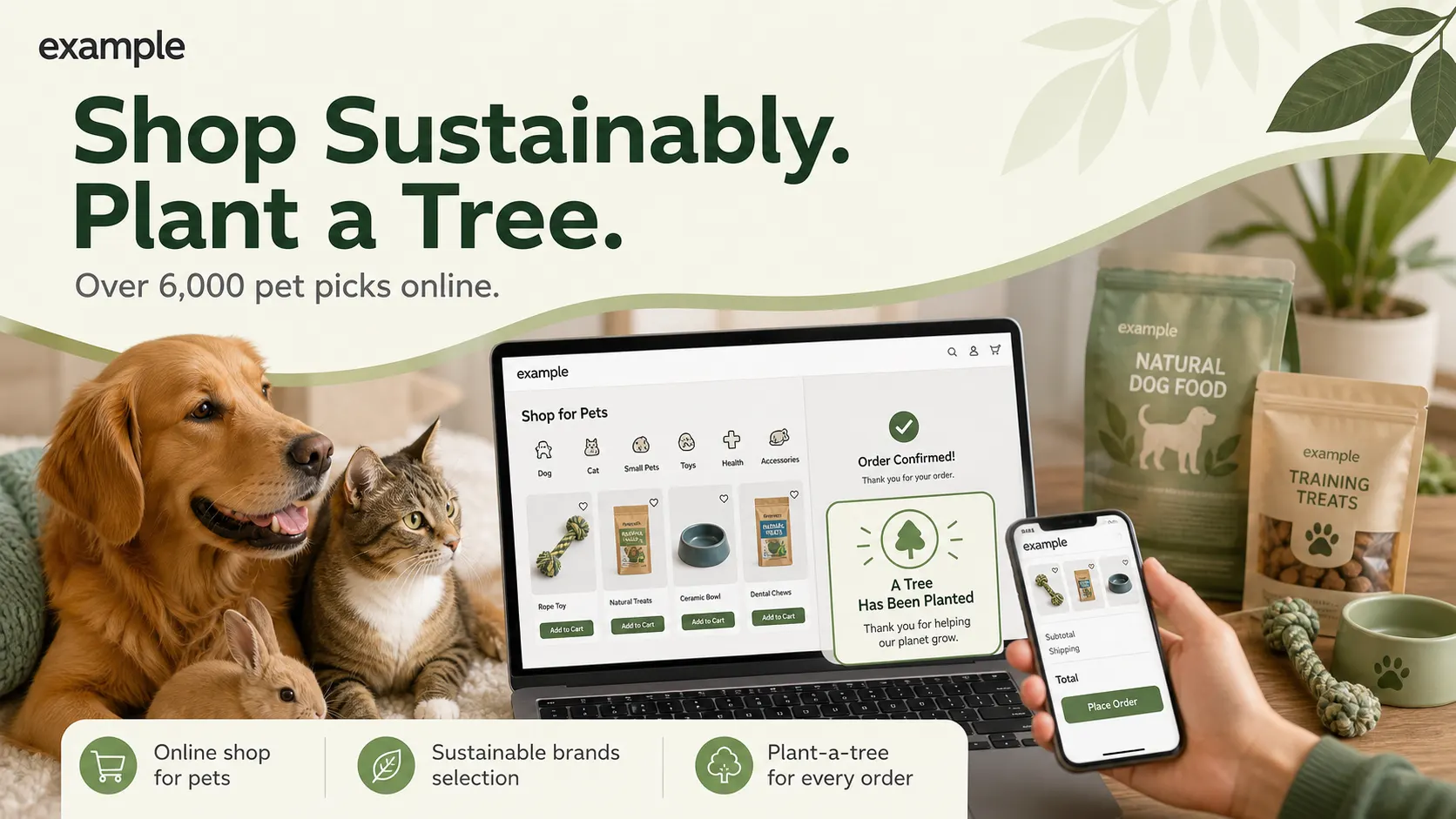
The store's offer, read off the site by the AI: eco-friendly pet products, a curated catalog of about 6,000 items, and one tree planted for every order. The campaign it proposed: "Shop Sustainably. Plant a Tree."

The part of the AI ad that actually works
Here's why this creative earns its keep, and it's a specific detail. It doesn't just announce "we plant trees" as a brand value and move on. It shows the mechanism: an order-confirmed screen, then a "Tree Planted, Thank you" badge right next to it. The cause is wired to the transaction, visibly, in the generated ad. That's the difference between purpose that sells and purpose that decorates.
Shoppers are smart about this in a way marketers underestimate. They've been told "we care about the planet" by enough companies that the phrase is now noise. What still lands is the causal link: I buy this bag of dog food, a tree goes in the ground, here's the receipt that proves it. The creative makes the cause feel like a feature of the product, not a separate moral the company wants credit for. That's the whole game.
The 4:5 feed version the generator produced carries the same logic with a bit more breathing room:

And the story, which is where I'd actually run this for conversions:

What I'd change
A few opinions, because the AI brand read is good and the execution is close but not perfect.
First, "Shop Sustainably" is the weaker half of that headline. Nobody opens a pet store to shop sustainably; they open it because their dog needs food. Lead with the pet, then attach the tree. Something like "Food for your dog. A tree for the planet." puts the actual purchase first and the cause second, which, counterintuitively, makes the cause land harder because it doesn't feel like you're being preached at. The current lead, "Shop Sustainably," leads with the moral, and that's the move that triggers the greenwashing alarm I mentioned.
Second, the "6,000 pet picks" subline is doing more work than it gets credit for, and I'd promote it. Range is a real reason to pick one pet store over another, and 6,000 curated items is a concrete number, which always beats adjectives. I'd have the ad generator produce a version where the headline is about selection and the tree is the supporting beat, the inverse of what's here.

Third, and this is the one I feel strongest about: keep the confirmation screen in every format. The temptation in the wide banner is to drop the phone mockup for a prettier hero shot of the pets on the blanket. Resist it. The phone with the "Tree Planted" confirmation is the single most persuasive element in the whole set, because it's the proof. A golden retriever on a green blanket is stock-adjacent. A receipt that says a tree got planted is a claim.

The honest limitation
This works because the cause is genuinely tied to the product. One tree per order is a clean, countable, verifiable mechanic. The same playbook does not rescue a store whose "purpose" is vague affinity, "we love animals" with no mechanism attached. If you're a founder reading this and your cause isn't wired to a specific action per purchase, no creative, AI-generated or otherwise, will make it sell. Fix the offer first, then the ad has something real to show. The AI ad generator can surface the mechanism that's already there; it can't invent one that isn't.
Where it lands
A purpose-driven store's best ad is usually its order-confirmation screen, not its hero. The AI understood that instinctively from one website read and put the receipt front and center, which is the kind of judgment you don't expect from an ad generator. Your job is to make sure the mechanism in the ad matches a real mechanism in the business, and to lead with the pet, not the sermon.
More Posts
DeepSeek Harness hit 157k GitHub stars in 5 days — here's what it means for AI agents beyond coding
DeepSeek Harness (dsh), the everything-is-a-plugin open-source agent harness, is the fastest-growing repo on GitHub right now. We break down what it is, what the hype is really about, and what an open agent layer means outside coding — including for marketing.


AI ads for nonprofits: the AI ad generator that reads your mission — and the one-promise rule
We put an animal-welfare organization through an AI ad generator and kept running into the same mistake mission-driven brands make: trying to say everything in one ad. Cheap AI-generated creatives change that — one promise per ad, tested.
We let an AI ad generator run a back-to-school drop — five ad sizes, zero resizing
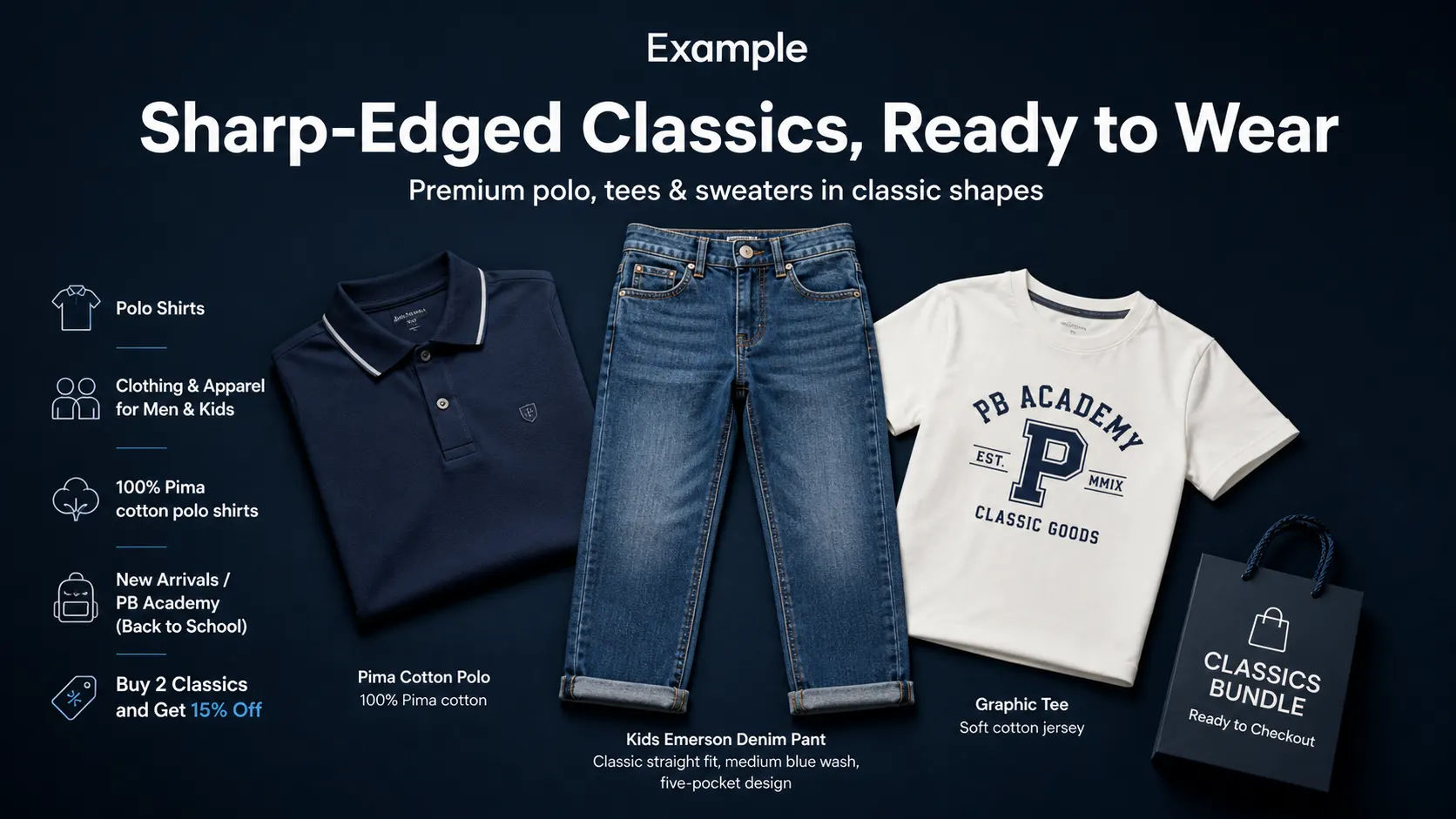
We pointed an AI ad generator at a seasonal clothing store to see how much of the usual launch busywork would disappear. The ad generator read the brand, wrote the headline, and produced every ad size. Most of the midnight resizing is genuinely gone.
Newsletter
Join the community
Subscribe to our newsletter for the latest news and updates